
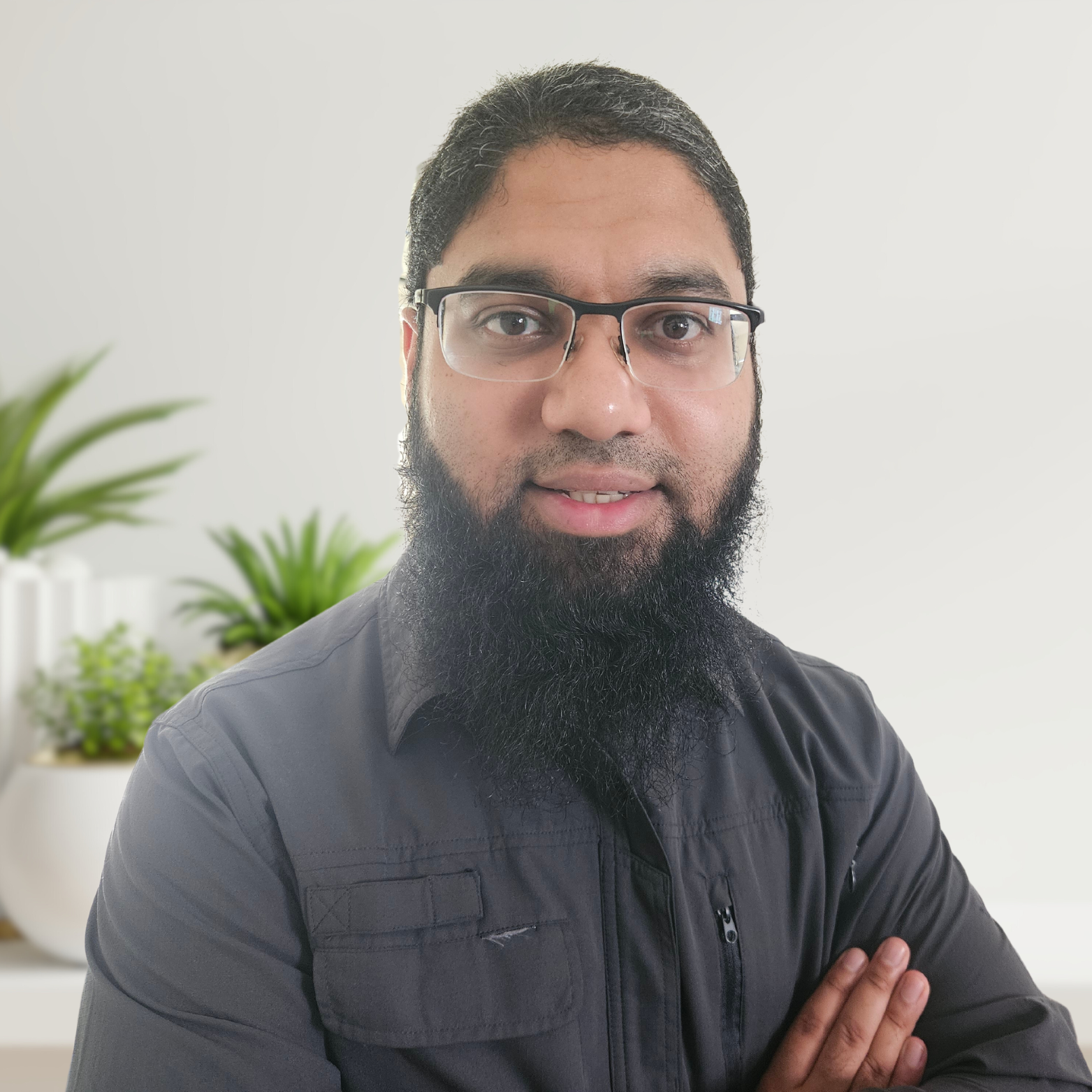
Muneer Nakhooda: The Nomad Psychologist
The Nomad Psychologist: Finding Yourself in a Changing World
In a world that keeps asking people to adapt faster, achieve more, and make sense of constant change, Muneer is interested in a quieter but deeply important question:
How do we stay human through it all?
That question runs through his work as a counselling psychologist, therapist, coach, speaker, educator, and founder of The Nomad Psychologist.
It also runs through his work with healthcare professionals exploring artificial intelligence, ethics, and the future of care.
AI is no longer waiting politely outside the therapy room. It is already part of how many clients make sense of their lives. They are using tools like ChatGPT to untangle arguments with partners, rehearse difficult conversations, journal through uncertainty, or find language for feelings they cannot quite name. By the time they arrive in therapy, AI may already be part of the story.
For Muneer, this is not something to ignore or panic about. It is something to meet with curiosity, humanity, and ethical care. As a psychologist whose work has long centred on helping people navigate change, uncertainty, and identity in a shifting world, this question sits at the heart of his practice: how do we stay human, thoughtful, and clinically grounded when technology enters the therapeutic space?
This July, Muneer will be running a practical talk for clinicians exploring what happens when AI becomes part of the therapeutic process, and how practitioners can respond with clarity, boundaries, and humanity.
Finding stability when the world is adrift
Stability has never meant staying still for Muneer. His work has taken him across countries, disciplines, and contexts. From the military health services to corporate consulting, from clinical work to an international online practice, from therapy rooms to conversations about AI and the future of care.
But beneath that movement has been a consistent question: how do people stay connected to who they are when life keeps changing around them? The Nomad Psychologist is not simply about travel, it’s about the experience of living between identities, careers, cultures, roles, expectations, and versions of yourself. Many of the people who find his work are not simply looking for symptom relief. They are trying to understand who they are as their lives change in front of their eyes.
They may be successful on paper but feel unsettled underneath. They may be navigating relocation, burnout, career change, loneliness, uncertainty, spiritual questions, or the quiet disorientation that comes when the life you built no longer feels like it fits. In those moments, the challenge is not always to “go back to normal.” Sometimes the deeper work is learning who we are when everything is different.
For Muneer, therapy is a place where people can slow down enough to listen to what change is revealing. His work is grounded in the belief that transition is not only something to survive. It can also become a doorway into greater clarity, resilience, purpose, and self-understanding. Muneer’s work helps people find stability not by pretending the world is fixed, but by helping them reconnect with what remains steady within themselves.
Therapy with both science and soul
The best therapy does not reduce you to symptoms. It helps you remember that you are more than what you are struggling with. For people navigating change, uncertainty, burnout, or questions of identity, therapy needs to offer more than insight alone. It needs to feel safe enough to be honest, practical enough to be useful, and hopeful enough to remind you that your life is not limited to the version of yourself you are struggling with right now.
That is the balance Muneer brings into his work.
His approach combines the science of change with the humanity of being fully heard. He draws from neuroscience-backed methods, including polyvagal-informed therapy, clinical hypnosis, Brain Working Recursive Therapy, and solution-focused approaches. But the techniques are never the centre of the work. The person is.
Sessions with Muneer are designed to help clients understand what is happening beneath the surface, reconnect with their strengths, and begin moving forward with more clarity and confidence. For some, that may mean learning how to regulate anxiety or recover from burnout. For others, it may mean making sense of a major life transition, finding direction after feeling lost, or rediscovering who they are beyond roles, expectations, and old survival patterns.
Muneer does not see therapy as simply managing symptoms or revisiting pain. It is also a space for possibility. A space to ask: What is still strong in me? What is trying to emerge? What kind of life am I being invited to build now? What clients often find is that therapy with Muneer feels both thoughtful and real. There is space for depth, but also for practicality. There is room for difficult emotions, but also for humour, perspective, and hope. Because therapy does not have to feel cold or clinical to be effective. It can be human, grounded, and gently transformative.
Redefining the Modern Practitioner
The modern practitioner is no longer only being asked to understand people. They are also being asked to understand a world that is changing before their eyes. This does not mean that therapy is being replaced. It means the context around care is changing.
Muneer’s work with AI grew from this very human question: how can practitioners engage with new technology thoughtfully, ethically, and without losing the relational core of their work?
Alongside The Nomad Psychologist, Muneer founded AI in Clinical Practice, an AI-focused behavioural health community that supports clinicians and healthcare professionals in making sense of these changes. His work is not about chasing every new tool or treating technology as the answer to everything. It is about helping practitioners respond with curiosity, clarity, and care.
Through talks, training, and community learning, Muneer helps professionals think through the practical and ethical questions AI raises: how to speak with clients about their AI use, how to set appropriate boundaries, how to update intake processes and policies, and how to remain clinically grounded in a world where digital tools are increasingly part of people’s emotional lives.
His upcoming talk, When Clients Bring AI Into Therapy, continues this work. It offers practitioners a practical and reflective space to explore what happens when AI enters the therapeutic process, not with panic or blind enthusiasm, but with thoughtful attention to ethics, humanity, and the therapeutic relationship.
For Muneer, redefining the modern practitioner is not about becoming more technological. It is about becoming more conscious. More intentional. More willing to ask better questions. And more committed to keeping care human, even as the world around care continues to change.
Every transition holds the possibility for growth
Muneer’s work sits at the meeting point between change and identity: the places where people are trying to understand themselves again, whether they are navigating relocation, burnout, career shifts, uncertainty, faith, technology, or the quiet feeling that life no longer fits the way it once did. Across therapy, coaching, and his work with practitioners, the thread is the same, helping people stay grounded, curious, and connected to their humanity while the world around them continues to move.
He does not frame change as something people simply need to survive, or as a problem to be solved as quickly as possible. He sees it as an invitation to listen more closely, to what still matters, what is ready to grow, and what kind of life is asking to be built next. For Muneer, the work is not about getting people “back to normal.” It is about helping them rediscover who they are beneath the noise, and find enough clarity, courage, and hope to move forward.
To work with Muneer, visit him at thenomadpsychologist.com, or book with him on Trova Health.
Join his upcoming class for practitioners: When Clients Bring AI Into Therapy: A practical and ethical conversation for modern practitioners, on July 14, 2026.
Published by Trova Health, a clinician-built global network of mental health and wellness professionals working to make culturally informed care more accessible worldwide. Our Provider Spotlight series shares the stories of providers who bring something exceptional to their work, wherever in the world they practise.
FAQs
What is “The Nomad Psychologist”?
The Nomad Psychologist is the online practice of Muneer Nakhooda, a counselling psychologist who works across three continents with professionals, expats, entrepreneurs, and people in transition. The name reflects his focus on helping people build confidence, resilience, and joy in a fluid and changing world rather than a fixed one.
What is therapy for people in transition?
Transition-focused therapy supports people through major life changes such as relocation, career shifts, burnout, or changes in identity. Rather than treating these moments only as problems to survive, Muneer approaches them as turning points that can lead to clarity and growth, using practical, strengths-based tools to help people move forward.
What is neuroscience-backed therapy?
Neuroscience-backed therapy uses approaches informed by how the brain and nervous system respond to stress and change, not only talk-based reflection. Muneer integrates techniques such as polyvagal theory, clinical hypnosis, and Brain Working Recursive Therapy (BWRT) alongside solution-focused and strengths-based methods to help create lasting change.
How can therapists respond when clients use AI?
Many clients now use AI to journal, seek advice, and process emotions before they ever reach a therapy session. Muneer teaches that clinicians can meet this with curiosity, ethics, and relational depth, thinking through disclosure, intake forms, policies, and boundaries so the conversation supports the work rather than replacing its human core. He explores this in his class, When Clients Bring AI Into Therapy.
Does online therapy work for expats and globally mobile clients?
For clients who move between countries, cities, and time zones, online therapy can offer continuity that in-person care cannot. Muneer works with expats, international students, and global citizens online, matching the way his clients actually live while still providing culturally attuned, clinically grounded support.
Can therapy be sensitive to a client’s faith?
Yes. For clients who want it, Muneer Nakhooda offers spiritually grounded therapy that honours both faith and psychology, exploring anxiety, trauma, or transitions in a way that respects a person’s values. It is one of several specialties within his broader practice.