
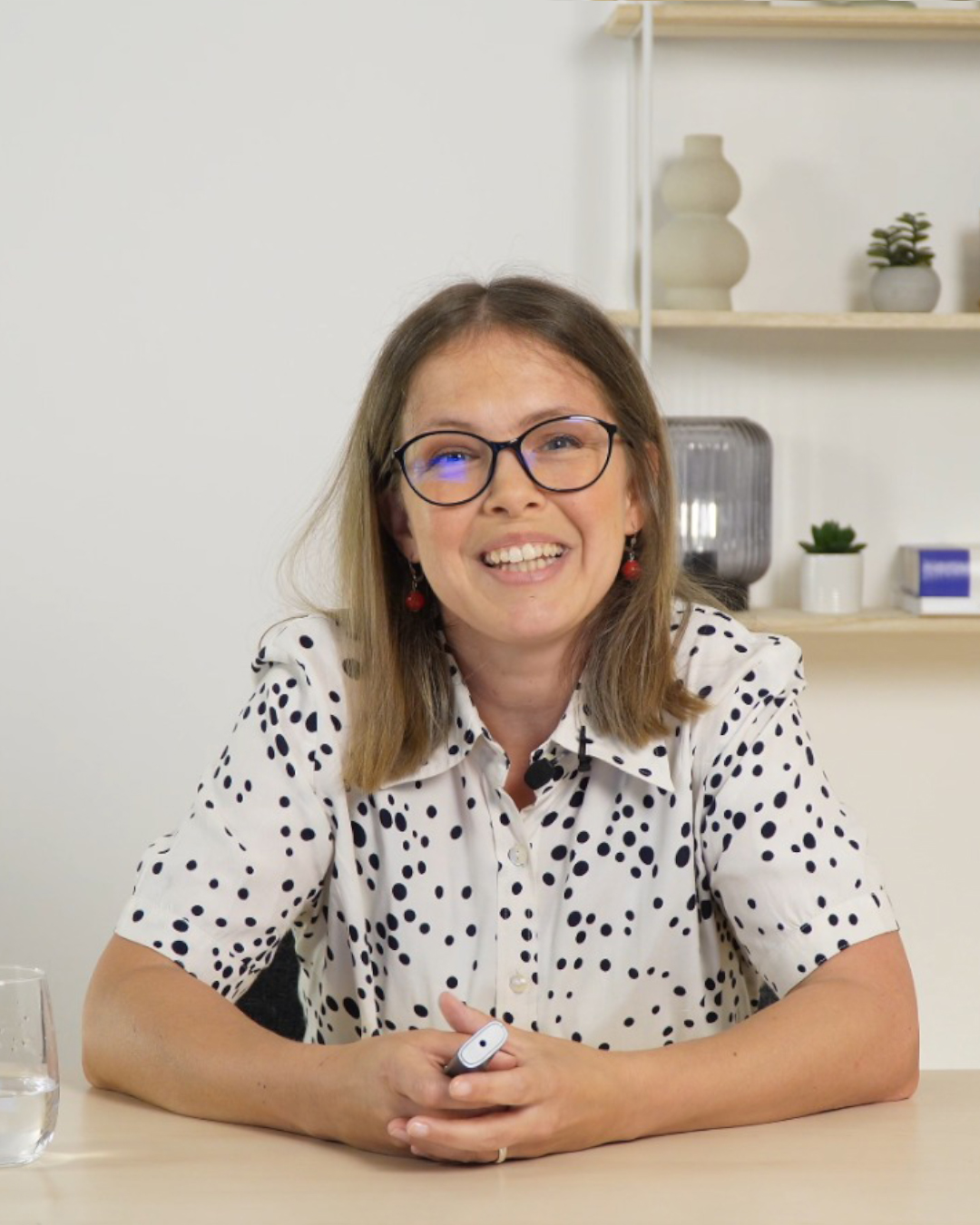
Ivana Mrgan: Moving Toward the Hard Thing
Moving Toward the Hard Thing
How a clinical psychologist who trains in parkour built her practice around meeting difficult emotions instead of avoiding them.
Watch someone train in parkour and you’ll quickly notice that an obstacle does not end their route. Instead, it defines it. A handrail becomes something to vault. A wall becomes a question of timing, judgment, and control. The discipline rests on a practical idea: you do not simply turn away from the challenge in front of you. You learn to read it and find a way forward.
Ivana Mrgan has trained in parkour for years. She is also a clinical psychologist and co-founder of Apsiha, a community mental health centre in Zagreb. In both parkour and psychotherapy, the work is much the same: staying present in the face of difficulty, responding with flexibility rather than reflex, and building capacity through deliberate practice.
The expat lifecycle, and the part no one warns you about
Learning how to move when the terrain has changed is also central to a subject Ivana knows personally and professionally: navigating life across cultures.
For years, Ivana lived and worked across cultures, from Croatia to Qatar, where non-citizens make up close to 88% of the population, most of them building a life far from home. She knows the full arc of the expat lifecycle: leaving, learning a new place’s rules from scratch, the long stretch of living between languages and identities. Much of her research and training work now centres on globally mobile people and the clinicians who support them.
She also knows the chapter almost nobody prepares for, which is coming home.
“Repatriation looks simple on paper, you go ‘home,’” Ivana writes. You are, after all, going back to what you know. What actually happens is stranger. For many people coming back, she says, it feels “more like an identity plot twist than a homecoming.” The place stayed roughly the same. You did not. Ivana has been through it herself, several times. In her words: “I’ve done several laps of the repatriation cycle myself: elated, uprooted, misplaced, grounded, ungrounded, recalibrating.”
Her own language for it is physical. Grounded, then ungrounded, then finding her footing again. It is how a person talks when they know what it means to land badly and get back up. Repatriation, like a bad landing, is not a failure of the person. It is part of finding your footing in a life that is both familiar and changed. The question running through Ivana’s work is what to do when the ground shifts beneath you.
Training toward the hard thing
The instinct most of us have with a difficult feeling is to get away from it. Distract, avoid, numb, push through. These strategies can bring short-term relief, but when avoidance becomes habitual, it can narrow a person’s life.
Parkour teaches the reverse, and so does Ivana’s clinical work. You do not clear the big gap on your first attempt. You break the movement down, you drill the landing and the roll, you learn to absorb impact in small, repeatable doses, until your body believes it can meet the thing it used to flinch from.
In therapy, Ivana is interested in building the same kind of confidence but emotionally. She calls the goal emotional agility and stamina: the capacity to stay with a hard feeling long enough to learn from it rather than be run by it. This capacity is trained, not summoned. You approach the difficult emotion the way a traceur approaches a wall that is a little too high: on purpose, with a plan and a willingness to try, adjust, and try again. In her own writing, she frames it as “an invitation to explore inner experiences with a warm and open heart, transforming stress and anxiety into stepping stones toward personal development.”
A method for the cases that do not fit one box
Ivana is not a one-method clinician. Across 17 years of clinical practice, she has trained in and worked with a wide range of evidence-based approaches, among them Cognitive Behavioural Therapy, Schema Therapy, and Acceptance and Commitment Therapy. She is an ISST-accredited Schema Therapist and an EABCT-accredited Cognitive Behavioural Therapist. Her postgraduate research examined how to adapt CBT so it fits people from different cultures rather than assuming one version travels everywhere. Ivana is also invested in research and practice building centered on globally mobile individuals and the experts who support them.
The clients who find her rarely arrive with a single clean diagnosis. They come with anxiety braided into grief, or a mood problem tangled up with a work crisis and a house move. For cases like these she leans on the Unified Protocol, a transdiagnostic form of CBT that works on the emotional mechanisms underneath many diagnoses at once. That makes it especially useful when people’s difficulties do not fit neatly into a single diagnostic label. Instead of a separate manual for each diagnosis, it teaches a shared set of skills: noticing what you feel as it happens, loosening rigid thinking, recognising the avoidance habits that keep you stuck, and gradually approaching situations that provoke difficult emotions so you can respond with greater flexibility. Ivana is an accredited Unified Protocol trainer, and this willingness to move toward emotion, rather than automatically away from it, sits at the heart of the work.
Extending the work to other clinicians
A growing share of Ivana’s work is training and supervising practitioners, especially in culturally sensitive therapy and the Unified Protocol. The reason is practical. Complex, cross-cultural cases routinely exceed the single-diagnosis frameworks many clinicians were trained on, and a therapist with only one manual per label can feel stranded when a client does not match any of them. A transdiagnostic approach offers a flexible way to bring clarity and consistency to the clients who do not slot neatly into a category.
That is the focus of her upcoming session with Trova.
Building emotional stamina
Ivana cannot promise anyone a soft landing. What she offers is a way through the hard part: noticing the self-judgment, naming the identity that has outgrown its old shape, and taking small, deliberate steps toward the feelings instead of away from them. Her advice to anyone mid-transition is short. Go gently.
The obstacles do not disappear. Whether on a parkour course, in a hometown that suddenly feels foreign, or during seasons of anxiety, grief, and change, the work is the same. You do not get a life without walls. You become someone who knows how to meet them. That is what Ivana practises, and what she teaches, in the gym and in the therapy room.
To work with Ivana, visit her practice at apsiha.hr, or book with her on Trova Health.
Join Ivana’s upcoming class for practitioners: Clarity for Complex Cases: An Introduction to the Unified Protocol on September 17, 2026.
Published by Trova Health, a clinician-built global network of mental health and wellness professionals working to make culturally informed care more accessible worldwide. Our Provider Spotlight series shares the stories of providers who bring something exceptional to their work, wherever in the world they practise.
Frequently asked questions
What is the Unified Protocol? The Unified Protocol is a transdiagnostic form of cognitive behavioural therapy developed to treat emotional disorders through one shared set of skills rather than a separate manual for each diagnosis. It focuses on how people experience and respond to strong emotions, and teaches skills such as emotional awareness, cognitive flexibility, and gradually facing situations that provoke difficult feelings. Ivana Mrgan is an accredited Unified Protocol trainer.
What is repatriation, or reverse culture shock? Repatriation is the process of moving back to your home country after a period living abroad. Reverse culture shock is the disorientation that often comes with it: home has changed, you have changed, and the routines and sense of identity you left behind no longer fit cleanly. It is frequently harder than the original move, in part because people expect it to be simple and judge themselves when it is not.
What is cognitive flexibility? Cognitive flexibility is the ability to shift how you think about and respond to situations, rather than getting stuck in familiar patterns. In therapy, developing greater cognitive flexibility can help you consider new perspectives, respond differently to difficult emotions, and create new emotional learning through experience.
What is transdiagnostic therapy? Transdiagnostic therapy treats the emotional processes that appear across many different diagnoses due to shared underlying mechanisms, instead of treating each disorder as entirely separate. This helps people whose difficulties overlap, for example anxiety alongside depression, because one coherent set of skills can address the mechanisms underneath both.
What does the Unified Protocol help with? The Unified Protocol was developed for anxiety and depressive disorders and related emotional difficulties, and research supports its use across this group of conditions. Because it works on shared emotional mechanisms, clinicians also apply it to overlapping and comorbid presentations, though the strength of the evidence varies by condition. It is best understood as a framework for emotional disorders broadly rather than a cure for any single one.