
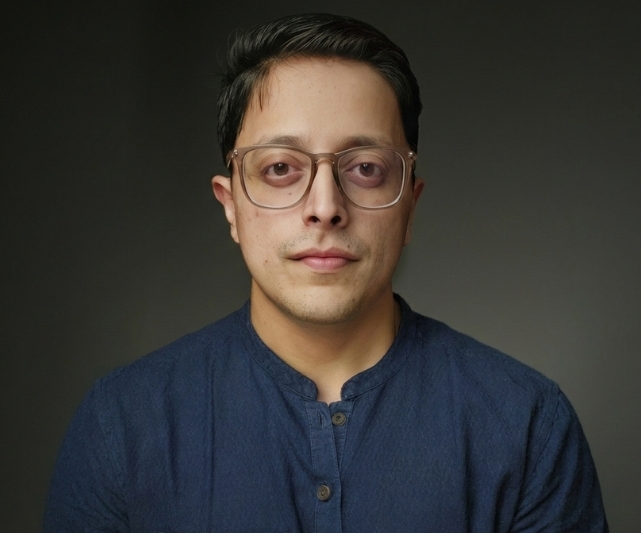
Kanishka Sharma: Clinical Care Informed by Forensic Understanding
Meet Kanishka: Clinical Care Informed by Forensic Understanding
Clinical Care Informed by Forensic Understanding
People rarely arrive in therapy with just one concern. They arrive carrying several at once: overthinking, emotional shutdown, anxiety, grief, compulsive patterns, stress, body-based distress, relationship difficulties, and the quiet exhaustion of trying to appear functional while privately feeling overwhelmed.
Kanishka built Mental Health with Kanishka around that reality. His work is grounded first in clinical care: careful assessment, structured formulation, and psychotherapy that helps people understand what their emotional life is trying to tell them rather than forcing them to suppress it. His forensic background adds another layer, particularly when distress is shaped by institutions, authority, trauma, risk, stigma, or environments where emotional expression has never felt safe.
That balance sits at the heart of his work. As an RCI-licensed Clinical Psychologist and Forensic Psychologist, Kanishka works at the intersection of emotional care, psychological assessment, and the complex realities that shape people’s lives. His work moves comfortably between the consulting room and the broader systems that influence mental health, bringing both clinical depth and real-world perspective to the people he serves.
Meet Kanishka
Kanishka is an RCI-licensed Clinical Psychologist (CRR No. A71039), Forensic Psychologist, Ph.D. (Psychology) scholar, and QPR Suicide Prevention Gatekeeper Instructor based in Varanasi. He has more than six years of experience supporting adolescents and adults across clinical, hospital, community, digital mental health, and forensic-informed settings.
His approach is shaped by work across private practice, hospital settings, and forensic contexts, including correctional and criminal justice environments. That combination gives his work a distinct profile: clinically grounded, ethically careful, culturally sensitive, and alert to the ways people adapt to stressful systems in order to survive them.
Sessions at Mental Health with Kanishka are offered online through Google Meet, in Hindi and English, for adolescents and adults. The emphasis is not on quick advice or surface-level reassurance. The work is slower, more structured, and more personal: helping people recognise their protective patterns, understand the emotions beneath them, and build a life that feels less governed by fear, avoidance, shame, or numbness.
What Does a Clinical and Forensic Psychologist Do?
A clinical psychologist is trained to assess, formulate, and treat mental health concerns using psychological methods. This includes understanding symptoms, emotional patterns, personality functioning, coping styles, relational dynamics, risk, diagnosis, and the social context in which distress develops.
A forensic psychologist brings psychological knowledge into legal, correctional, institutional, and justice-related settings. This is not only the dramatic courtroom work or criminal profiling people picture. In practice, it often means understanding how people function under pressure, how trauma and risk emerge within institutional systems, how authority affects disclosure, and how psychological care has to adapt when safety, stigma, and trust are complicated.
Kanishka’s work brings these two identities together. The clinical side keeps therapy focused on healing, formulation, emotional processing, and symptom relief. The forensic side adds sensitivity to power, risk, trauma, institutional stress, and the ways people protect themselves when they have learned that being open can feel unsafe.
Why the Clinical Identity Comes First
The centre of Kanishka’s current practice is psychotherapy. His clients are not reduced to categories such as diagnosis, case history, or risk profile. They are understood as people whose nervous systems have learned particular ways of staying safe: overthinking, shutting down, controlling, people-pleasing, avoiding, disconnecting, or becoming numb.
In therapy, these responses are not treated as flaws. They are explored as survival strategies that may once have been necessary but have now become exhausting, rigid, or painful. This clinical stance matters because many people seek help only after years of functioning on the outside while feeling overwhelmed inside.
The aim is not to remove emotion or make a person endlessly resilient. The aim is to help the person develop emotional clarity, regulation, self-understanding, and more flexible ways of relating to themselves and others.
How Forensic Training Strengthens the Clinical Work
Forensic training becomes valuable when a person’s distress cannot be understood as an individual symptom alone. Some people have lived through authority-based fear, institutional stress, violence, custody-related trauma, public shame, coercive relationships, or environments where any vulnerability could be punished. Others work in high-control systems, such as policing, security, or other duty-bound roles, where emotional suppression is often mistaken for strength.
Kanishka’s earlier research with armed police personnel examined control, stress tolerance, and responses to situational stress using the Rorschach Inkblot Test. That work shaped a question that continues to inform his practice: what happens to people whose lives require them to stay composed, even when their inner world is carrying more than they can express?
This question is not limited to uniformed personnel or justice-involved populations. It shows up in students, professionals, caregivers, survivors, and young adults who learned to stay “fine” because their environment made distress feel inconvenient, unsafe, or unacceptable. A forensic-informed lens helps therapy stay alert to context, power, safety, and the cost of chronic control.
Therapy Approach: Emotion, Formulation, and Recovery
Kanishka’s primary therapeutic orientation is Emotion-Focused Therapy (EFT), supported by evidence-based methods including CBT, ICD-11-informed diagnostic understanding, addiction care, and Recovery-Oriented Cognitive Therapy (CT-R) from the Beck Institute.
EFT is especially relevant for people who have spent years avoiding, intellectualising, suppressing, or being overwhelmed by emotion. It helps clients approach their feelings with safety and structure, so that emotion becomes a source of information rather than a threat to escape.
CT-R adds a recovery-oriented frame, helping people reconnect with agency, aspiration, meaningful activity, and a sense of future direction. For clients whose lives have been shaped by chronic adversity, institutional stress, severe symptoms, or repeated invalidation, that focus matters. Therapy is not only about reducing symptoms; it is also about rebuilding a sense of possibility.
Who This Work Is For
Mental Health with Kanishka is designed for adolescents and adults who may appear functional on the outside but feel stuck, anxious, emotionally numb, ashamed, tense, or overwhelmed inside. Many clients come with anxiety, chronic overthinking, low mood, trauma-related concerns, dissociation, OCD, health anxiety, somatoform symptoms, body image struggles, low self-esteem, recurring relationship patterns, adjustment difficulties, and stress tied to family, work, study, or identity transitions.
The practice also suits people who want therapy that respects the Indian context. Family obligations, limited privacy, stigma, financial pressure, social expectations, and the lack of easy exits from difficult situations all shape mental health in ways that cannot be ignored. Therapy has to meet the person within that reality, not outside it.
What This Practice Does Not Offer
Mental Health with Kanishka is a psychotherapy practice. It does not provide emergency or crisis support, inpatient care, suicide helpline services, court-related certifications, workplace certificates, or documents for legal purposes.
Being forensic-informed shapes how Kanishka understands risk, safety, and context, but it does not turn therapy into a legal assessment. The forensic background deepens his clinical care but the clinical care is always the central purpose.
Care That Is Structured, Ethical, and Human
Kanishka’s work combines structure with warmth. Assessment and formulation help create clarity, while the therapeutic relationship offers a safe space to explore what has often gone unspoken. The work is collaborative rather than directive, and the focus is on helping clients understand their patterns without shame.
His public mental health work through Mental Health with Kanishka extends this philosophy beyond the therapy room. As a QPR Suicide Prevention Gatekeeper Instructor, he also supports suicide-prevention awareness, teaching people to recognise warning signs, ask direct and compassionate questions, and connect those at risk with appropriate support. Through public education, he makes psychological ideas more accessible and narrows the distance between needing help and seeking it.
Whether through individual therapy, clinical assessment, forensic-informed understanding, or public psychoeducation, one thread runs through Kanishka’s work: people are more than their symptoms, roles, or histories. Therapy begins when those parts of a person are allowed to be seen with care, structure, and respect.
Book with Kanishka on Trova Health. Learn more about his approach at mhwithkanishka.com.
Published by Trova Health, a clinician-built global network of mental health and wellness professionals working to make culturally informed care more accessible worldwide. The Provider Spotlight series shares the stories of clinicians who bring something distinctive to their work, wherever in the world they practise.
FAQs
What does a Clinical and Forensic Psychologist do?
A Clinical and Forensic Psychologist combines clinical mental health expertise with forensic-informed understanding of legal, correctional, institutional, and justice-related contexts. In Kanishka’s practice, this means psychotherapy remains the centre of care, while forensic training adds sensitivity to trauma, risk, safety, power, institutional stress, and complex life histories.
Is Kanishka an RCI-licensed Clinical Psychologist?
Yes. Kanishka is an RCI-licensed Clinical Psychologist (CRR No. A71039) and Forensic Psychologist based in Varanasi. He is also a Ph.D. (Psychology) scholar and a QPR Suicide Prevention Gatekeeper Instructor.
What concerns does Kanishka work with?
He works with adolescents and adults across anxiety, health anxiety, depressive states, OCD, personality-related difficulties, trauma-related concerns, dissociation, stress and somatoform concerns, body image concerns, self-esteem difficulties, adjustment concerns, relationship patterns, and life or role transitions.
What therapy approaches does he use?
His primary modality is Emotion-Focused Therapy (EFT Levels 1 and 2). He also integrates evidence-based methods including CBT, ICD-11-informed diagnostic understanding, addiction care, and Recovery-Oriented Cognitive Therapy (CT-R) from the Beck Institute.
What is QPR Suicide Prevention training?
QPR stands for Question, Persuade, and Refer. As a QPR Suicide Prevention Gatekeeper Instructor, Kanishka is trained to teach others how to recognise possible warning signs of suicide, respond with direct and compassionate questioning, and connect a person at risk with timely professional or crisis support.
How does forensic psychology inform his clinical work?
Forensic psychology informs his ability to understand distress shaped by authority, risk, institutional systems, trauma, stigma, and high-control environments. It helps him approach clients with greater sensitivity to context and safety, without reducing therapy to a legal or forensic assessment.
Does Mental Health with Kanishka provide court reports or legal certificates?
No. The practice is primarily a psychotherapy service and does not provide court-related documents, workplace certificates, legal certifications, emergency services, inpatient care, or suicide helpline services through routine therapy appointments.
Does he offer online therapy?
Yes. Sessions are offered online through Google Meet. They are 50 minutes long and available to India-based and international clients.
Does he offer therapy in Hindi and English?
Yes. Kanishka works in both Hindi and English, with attention to the cultural realities of mental health care in India.
How can someone book a session?
You can find Kanishka on Trova Health to book an online session, or learn more about his approach at mhwithkanishka.com. Sessions are available to clients based in India and internationally.